You're Exhausted. But Is It Just Tiredness or Is It Burnout?
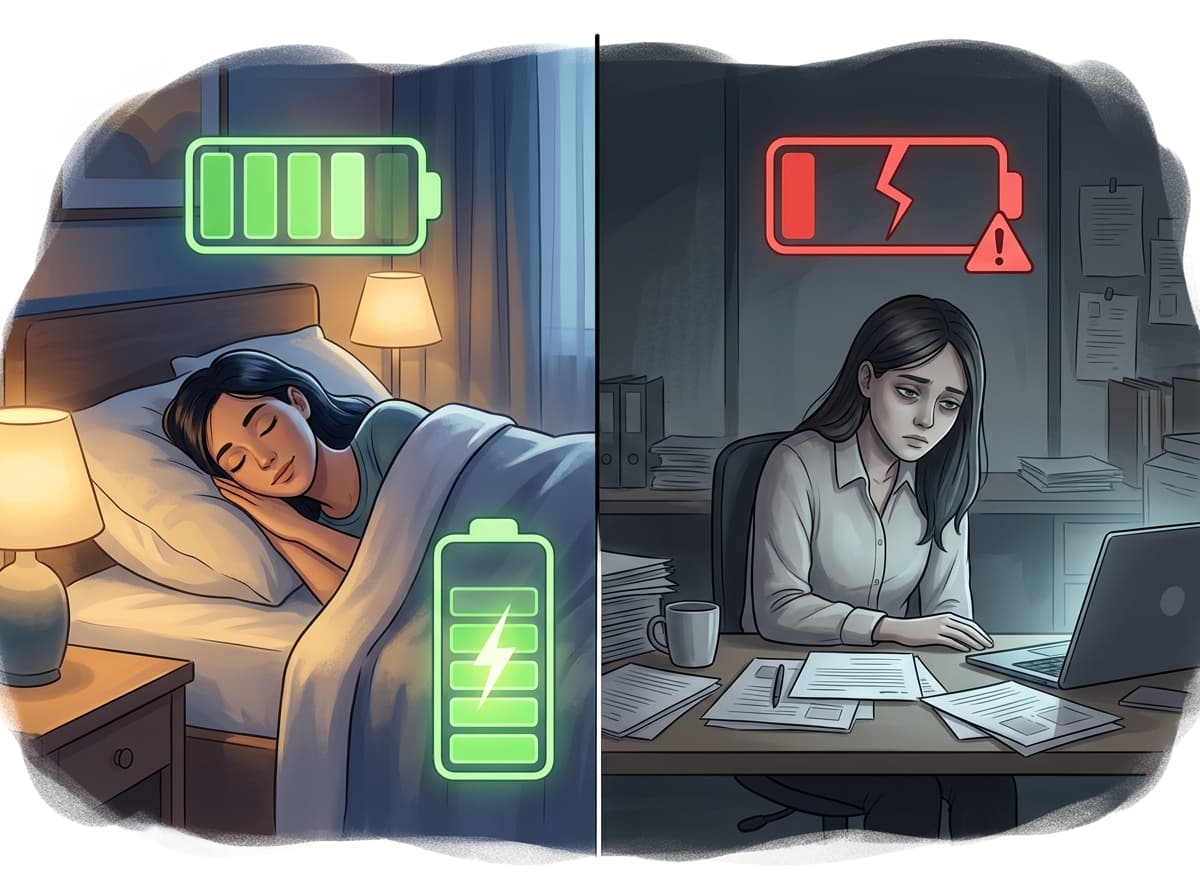
The core difference is this: Tiredness is a physical response to exertion that sleep fixes. Burnout is emotional exhaustion from prolonged, unmanageable stress that rest alone cannot fix.
When you're tired, your body signals: "I need rest." Sleep restores you. A weekend helps. A vacation fixes it. This is a normal response to overwork or poor sleep.
Burnout is fundamentally different. It's a psychological state resulting from chronic workplace stress-often from feeling powerless, unappreciated, or facing unrealistic demands. Your mind reaches a point of collapse: "I cannot do this anymore."
Burnout has three core characteristics:
- Emotional exhaustion - You feel drained, depleted, unable to cope
- Cynicism and detachment - You stop caring about work, outcomes, and people
- Reduced sense of accomplishment - You feel ineffective, like your efforts don't matter
The key distinction: Tiredness improves with rest. Burnout requires actual change in your situation. A vacation won't fix burnout. Neither will a weekend. Only changing the underlying condition-your workload, boundaries, role, or environment-addresses burnout.
Most people confuse these two states, especially in India where overwork is normalized as virtue. Many treat burnout like regular fatigue, hoping rest will solve it. But this delays recovery and makes burnout worse.
This guide provides a clear framework to identify which state you're in, understand why it happens (particularly in Indian work culture), and know exactly what to do about it.
What's Really Happening: The Core Difference
Tiredness (Fatigue)
Tiredness is a physical response to exertion or lack of sleep.
When you're tired, your body is saying: "I need rest." It's a signal that you've depleted your physical or mental energy reserves. Sleep fixes it. A weekend helps. A vacation restores you.
Key characteristic: Tiredness goes away when you rest.
Burnout
Burnout is emotional exhaustion from prolonged, unmanageable workplace stress.
It's not just about being tired. It's a psychological state where you've been under chronic stress-often from feeling powerless, unappreciated, or unable to meet unrealistic demands-and your mind has essentially said: "I can't do this anymore."
Burnout has three core components (as defined by the Maslach Burnout Inventory):
- Emotional exhaustion - You feel drained, depleted, unable to cope
- Cynicism or detachment - You stop caring about work, about outcomes, even about people
- Reduced personal accomplishment - You feel ineffective, like nothing you do matters
This framework is recognized globally. The World Health Organization officially recognized burnout in 2019 as an occupational phenomenon in its International Classification of Diseases (ICD-11).
Key characteristic: Rest alone doesn't fix burnout. You need actual change.
Unsure which one you're experiencing? Take a free assessment to understand your situation better and get personalized guidance.
Take Free Burnout & Stress Assessment
Here's How to Tell Them Apart: The Symptoms Checklist
Signs You're Tired (Not Burned Out)
- ✓ You feel physically exhausted after work or a long project
- ✓ One good night of sleep or a day off helps significantly
- ✓ You still feel motivated about some things (maybe not work, but hobbies, friends, family)
- ✓ You can still laugh, feel joy, or get excited occasionally
- ✓ Your negative feelings improve with rest and recovery
- ✓ You can imagine feeling better after a break
- ✓ You still care about the quality of your work (at least sometimes)
Reality check: If a weekend fixes you, you're probably just tired.
Signs You're Burned Out (Not Just Tired)
- ✗ You feel emotionally hollow, not just physically tired
- ✗ Rest doesn't help-you feel the same dread on Monday morning
- ✗ Everything feels pointless, even things you used to enjoy
- ✗ You feel cynical: "Why am I even trying? Nothing matters."
- ✗ You've emotionally disconnected from work (or life)
- ✗ You struggle to complete basic tasks, even things you're good at
- ✗ You feel resentful toward your job, boss, or colleagues
- ✗ Physical symptoms: chronic headaches, insomnia, GI issues
- ✗ You can't imagine feeling better without major changes
- ✗ You're snapping at people you love for small reasons
Reality check: If a weekend doesn't help and you dread Monday more than ever, you might be burned out.
Recognize yourself in the burnout signs? Get a professional assessment to understand your situation better.
The Real Warning Signs You're Heading Toward Burnout
These are the early signals. If you recognize these in yourself now, you can still prevent full burnout.
1. You Can't Turn Off
You check work emails at 10 PM. You're answering Slack messages on Sunday. Your brain doesn't stop running through work scenarios even when you're supposed to be relaxing.
Why this happens in India: The expectation that you're "always available" is deeply embedded in corporate culture. Your boss texts you at night. Clients expect immediate responses. "Work-life balance" is talked about but not practiced.
What to do: Set boundaries now. No emails after 7 PM. No work talk during meals. These feel impossible at first, but they're non-negotiable.
2. Your Standards Drop (But You Don't Notice)
You used to care about the quality of your work. Now you're just trying to get things done. You're shipping things you wouldn't have shipped a year ago. You stop attending meetings about topics that interest you. You skip the things that used to energize you (mentoring junior staff, side projects, learning).
Why this is dangerous: This is your mind protecting itself by caring less. But this "protection" actually accelerates burnout because you lose the things that gave you purpose.
What to do: Notice if you've abandoned activities that used to fuel you. Start doing one of them again this week.
3. Irritability and Emotional Withdrawal
Small things make you angry. Your partner asks about your day and you snap. You don't want to go to family gatherings. You're avoiding friends. You feel disconnected from people you love.
Why this matters: Burnout doesn't just affect work. It bleeds into all relationships. And when you withdraw from your support system, burnout gets worse.
What to do: Tell people close to you: "I'm struggling, and I might not be myself right now. But I love you." This opens the door for support.
4. You're Getting Sick More Often
You catch every cold going around. Your stomach is upset constantly. You have chronic tension headaches. You're not sleeping well (either too much or too little).
Why this happens: Chronic stress suppresses your immune system. Your body is also trying to force you to rest by shutting down.
What to do: This is your body waving a red flag. If you're sick more than twice in a month, it's time to examine your stress levels.
5. Sunday Dread Becomes Sunday Terror
You used to think about work on Sunday evening. Now you feel genuine dread. Your chest tightens. You consider calling in sick on Monday. Sometimes you actually do.
Why this is serious: This is your nervous system saying the environment is unsafe. Trust this signal.
What to do: If you're experiencing this regularly, burnout is already here or very close.
Why Indian Professionals Are Especially Vulnerable to Burnout
Burnout doesn't happen equally to everyone. It's more common in certain cultures and work environments. And India has several risk factors.
Factor 1: "Sacrifice = Success" Mentality
In Indian culture, hard work and sacrifice are seen as virtues. Your parents probably told you: "Nothing worthwhile comes easy." We celebrate people who work 60-hour weeks. We normalize saying "I'm so busy" as if it's a badge of honor.
The cost: This mindset makes it hard to recognize burnout because suffering is seen as the price of achievement.
Factor 2: Family Pressure + Job Stress
In the West, people compartmentalize: "This is my work stress, this is my personal life." In India, these overlap constantly.
Your boss might stress you. But your parents are also asking, "When are you getting married?" Your in-laws are criticizing your salary. Your extended family is judging your choices. These stressors don't stay at work.
The cost: You're stressed about your job AND your personal life simultaneously.
Factor 3: Limited Mental Health Awareness
Even though things are changing, there's still stigma around burnout in India. You can't easily say, "I'm struggling with my mental health" without people assuming you're weak or unstable. So people hide it. They push through.
The cost: Burnout goes untreated longer.
Factor 4: Startup and Tech Culture
The startup world (especially in Bangalore, Delhi, Mumbai) glorifies overwork. "Sleep when you're dead." All-nighters are celebrated. Saying no to extra work is seen as lacking ambition.
The cost: People push themselves far past healthy limits.
What Happens If You Ignore the Warning Signs
This is important to understand: Burnout doesn't get better on its own.
Early stage burnout (0-6 months):
- Fatigue and irritability
- Difficulty concentrating
- Sleep problems
- You still believe things will improve
Moderate burnout (6-18 months):
- Cynicism sets in
- You feel numb
- Physical symptoms intensify
- You're considering quitting
- Nothing feels worth it
Severe burnout (18+ months):
- Depression and anxiety
- Complete emotional detachment
- Physical illness (real health problems)
- You've quit (either the job or, in worst cases, life)
- Recovery takes years, not weeks
Here's the truth: Most people wait until severe burnout to seek help. By then, the damage is significant.
The Recovery Roadmap: How to Recover from Burnout vs Tiredness
If You're Just Tired
Time needed: 1-3 weeks of proper rest
What works:
- A real break (not answering emails during vacation)
- Sleep (prioritize 7-8 hours consistently)
- Exercise (even 30 minutes a day helps)
- Time with people you enjoy
- Doing things that restore you
Timeline: You'll notice improvement within 5-7 days.
If You're Burned Out
Time needed: 3-12 months of active recovery
What works:
Step 1: Remove or Change the Stressor (Critical)
This is the most important step. If you stay in the same situation, recovery is almost impossible.
Options:
- Transfer to a different team
- Negotiate reduced hours or workload
- Take a leave of absence
- Look for a new job
- Start a business on your terms
- Go freelance
Reality: This might mean less money or less status. But burnout costs you more-in health, relationships, and years of your life.
Step 2: Rebuild Your Nervous System
Your nervous system is in overdrive. You need to bring it back to baseline.
What helps:
- Therapy (ideally with someone who understands work stress)
- Meditation or breathing exercises (start with 5 minutes daily)
- Movement (yoga, walking, dancing-not intense exercise at first)
- Nature (even 15 minutes in a park helps)
- Creative activities (writing, art, music-not performance, just expression)
Step 3: Reconnect With Meaning
Burnout often involves losing sense of purpose. You need to rebuild this.
Questions to ask yourself:
- What did I used to enjoy about this work?
- What impact do I actually want to have?
- What would feel meaningful to me?
- What did I used to do for fun that I've abandoned?
Take action: Do one thing this week that feels genuinely meaningful to you.
Step 4: Get Professional Support
If you've been burned out for more than 2-3 months, talking to a therapist or counselor is valuable. They can help you:
- Process the experience
- Rebuild confidence
- Make better decisions about your career
- Address any depression or anxiety that's developed
Ready to take this step? Connect with a therapist who specializes in burnout recovery.
Book a Session with a Burnout Specialist
Or start with our free assessment to understand your burnout level:
When to Seek Professional Help
See a mental health professional if:
- You've been burned out for more than 3 months
- Physical symptoms are getting worse (chronic pain, serious sleep problems, stomach issues)
- You're having thoughts of harming yourself
- Your relationships are suffering significantly
- You're using alcohol or food excessively to cope
- You feel hopeless about the future
This is not weakness. This is wisdom.
If any of these apply to you, reach out for support today. You don't have to carry this alone.
Find a Therapist You Can Trust
Real Stories: How to Tell the Difference
Story 1: Raj's Case (Just Tired)
Raj, a 32-year-old operations manager, worked 60-hour weeks for 6 months on a major project. When the project ended, he felt completely exhausted.
His symptoms:
- Couldn't get out of bed for two days
- No motivation for work
- Extremely irritable
What changed for him: He took a week off, slept 10 hours a day, did things he enjoyed (tennis, hanging with friends), and returned feeling much better. Two months later, he was back to normal-and had actually learned from the experience. He negotiated better project boundaries with his boss.
Diagnosis: Burnout? No. Just severe fatigue from overwork.
Story 2: Meera's Case (Actual Burnout)
Meera, a 29-year-old software engineer, had been in the same role for 3 years. She worked evenings and weekends. Her manager kept setting impossible deadlines. She felt powerless-whenever she raised concerns, she was told to "just handle it."
Her symptoms:
- Chronic exhaustion that rest didn't fix
- Felt numb and detached
- Physical symptoms: constant headaches, stomach pain, insomnia
- Dread of work (and life generally)
- Had quit three hobbies she used to love
- Snapped at her boyfriend over small things
What changed for her: She realized rest wasn't the solution. She quit her job. Took 3 months with minimal work. Started therapy to process the experience. Started a different role (same company, different team) with better boundaries. Recovery took 6 months, but she's now doing well.
Diagnosis: This was real burnout.
The key difference: Meera's symptoms didn't improve with rest. Raj's did.
FAQ: Your Burnout Questions Answered
Q: Can I be tired AND burned out?
A: Yes. Often people experience both. The tiredness comes from overwork. The burnout comes from feeling powerless to change the situation. If you're both tired and burned out, addressing just the tiredness (taking a vacation) won't solve the burnout part.
Q: How long does burnout recovery actually take?
A: It depends on:
- How long you were burned out (6 months of burnout takes 6-8 weeks to recover; 2 years takes 6-12 months)
- Whether you change the situation
- Whether you get professional support
- How much your support system helps
General timeline: Expect 3-6 months minimum for moderate burnout. Severe burnout can take 1-2 years.
Q: Is taking a vacation enough to recover from burnout?
A: No, usually not. Vacations can help you rest temporarily. But if you return to the same situation, burnout returns. Real burnout recovery requires changing something-either the job, the role, the boundaries, or getting professional support to process it.
Q: Can my boss or company help me recover from burnout?
A: Sometimes. If your boss is supportive, you can negotiate:
- Reduced workload temporarily
- More resources or team support
- Different projects
- Flexible hours
But if your workplace culture is the cause of burnout, the company may not be able to help. In that case, you might need to leave.
Q: Is burnout the same as depression?
A: No, but they can coexist. Burnout is specifically about work and feeling powerless in a work context. Depression is broader-it affects how you see everything, not just work. However, prolonged burnout can lead to depression if untreated.
Q: How do I tell my family/spouse about my burnout without worrying them?
A: Be honest but clear about what you need:
- "I'm struggling with work stress. I'm going to make some changes."
- "I might not be myself for a few weeks while I work through this."
- "Here's what I need from you: [support, space, help with household tasks, etc.]"
Most people are relieved when you finally tell them. They've probably noticed something was wrong anyway.
Your Next Steps: What to Do Right Now
If You Think You're Just Tired
This week:
If You Think You're Burned Out
This week:
This month:
Remember: You're Not Lazy, Weak, or Failing
If you're experiencing burnout, the problem isn't you. The problem is the situation.
Some workplaces are inherently unsustainable. Some managers are unsupportive. Some cultures demand too much. These are organizational failures, not personal ones.
Burnout is a signal. Your mind and body are saying: "This isn't working." The brave thing isn't to ignore this signal and keep pushing. The brave thing is to listen to it and make a change.
You deserve work that doesn't destroy you. You deserve rest. You deserve to feel alive outside of work.
Get Professional Support
If you're struggling with burnout or chronic stress, talking to a mental health professional can help you:
- Understand what's happening
- Develop coping strategies
- Make better decisions about your career and life
- Rebuild your sense of purpose
CatalystCare connects you with Indian mental health professionals who understand workplace stress and burnout specifically.
Ready to Take Action?
Step 1: Understand Your Burnout Level (Free Assessment)
Not sure if you're burned out or just tired? Take our free burnout and stress assessment to understand where you stand.
Take Free Burnout & Stress Assessment
Step 2: Talk to a Specialist
Book a session with a therapist who specializes in workplace stress, burnout recovery, and career transitions.
Book an Appointment with a Therapist
Step 3: Get Daily Support While You Work
Cove is a free browser extension that helps you break negative thought patterns during work hours. Get helpful reminders, breathing exercises, and wellness tips throughout your day.
Key Takeaways
| Aspect | Tiredness | Burnout |
|---|---|---|
| Cause | Physical exhaustion, lack of sleep | Chronic stress, powerlessness |
| Fixed by rest? | Yes, mostly | No |
| Emotional state | Tired but still motivated | Numb, cynical, detached |
| Timeline | Days to 2 weeks | Months to years |
| Recovery method | Rest, sleep, break | Change situation + support |
| Physical symptoms | General fatigue | Chronic pain, illness |
References & Further Reading
External Authority Sources:
- Maslach Burnout Inventory (MBI) - The gold-standard assessment tool for measuring burnout across three dimensions
- WHO: Burnout as an Occupational Phenomenon - World Health Organization's official recognition of burnout (ICD-11)
- American Psychological Association: Workplace Stress - Evidence-based guidance on recognizing and managing workplace stress
- National Institute for Occupational Safety and Health (NIOSH): Workplace Stress - Government resources on occupational health and burnout prevention
Ready to Take the First Step?
You don't have to figure this out alone. Whether you're just tired or truly burned out, professional support can make all the difference.
Choose your path:
Unsure? Take Free Assessment - Understand your burnout level
Ready to talk? Book a Therapist - Connect with a specialist in burnout recovery
Need daily support? Download Cove - Free tool for breaking negative patterns at work
-Smita Joshi
Psychologist with 12 years of experience
Specializes in workplace stress, burnout recovery, and occupational wellness
P.S. - If you recognize yourself in this article, know that help is available. Burnout is treatable, and recovery is possible. You don't have to carry this alone. Your first step is reaching out.