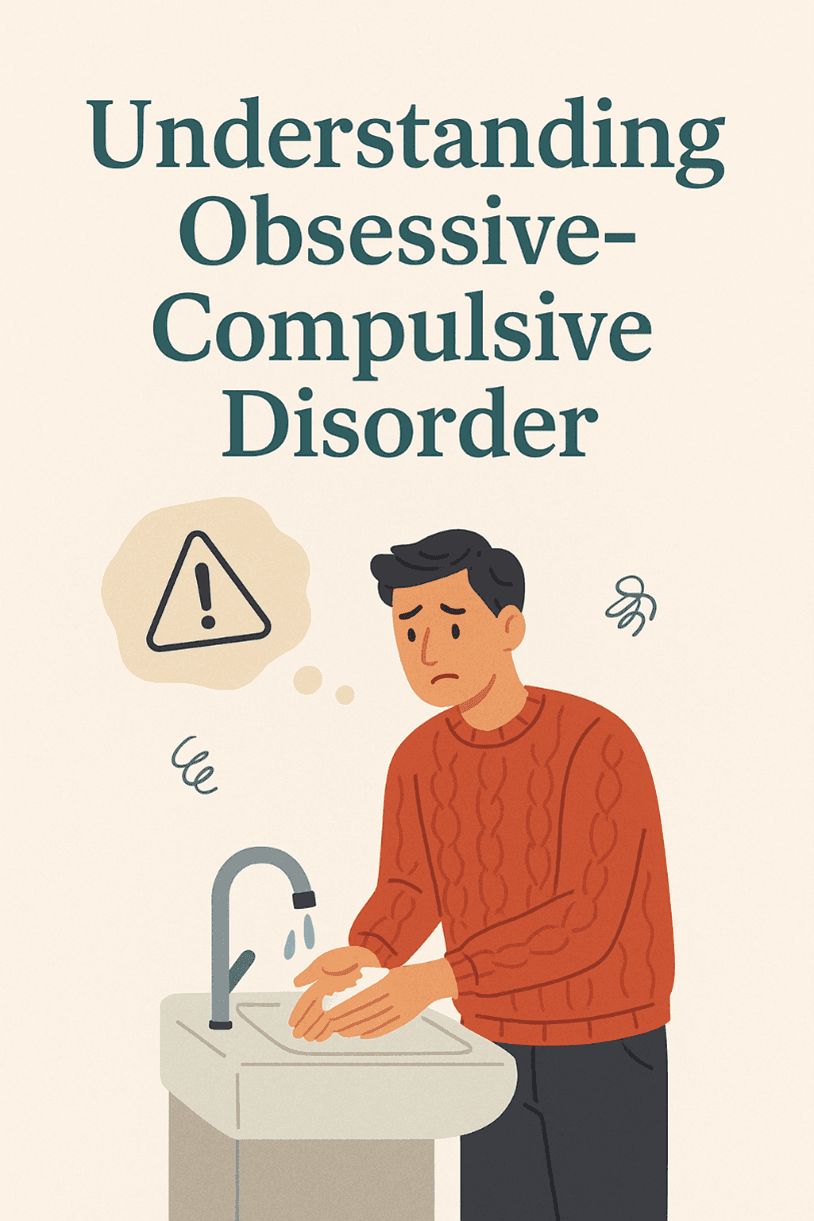
OCD Demystified: Breaking the Cycle of Obsessions and Compulsions

Abhishek Manudhane
Mental Health Guide
OCD Demystified: Breaking the Cycle of Obsessions and Compulsions

Introduction

Obsessive-Compulsive Disorder (OCD) is often misunderstood as simply being “neat” or “organized.” In reality, OCD is a serious mental health disorder where unwanted thoughts (obsessions) lead to repetitive behaviours (compulsions). These cycles can feel overwhelming and time-consuming, but with awareness and treatment, it is possible to manage and improve quality of life.

What is OCD?

OCD is a condition where intrusive thoughts trigger repetitive behaviours. People with OCD may recognize that their rituals are irrational but still feel compelled to act on them.

Common Obsessions and Compulsions

  • Obsessions: Fear of germs, fear of harm, need for order, unwanted taboo thoughts
  • Compulsions: Excessive cleaning, checking locks, counting or repeating phrases, arranging items
  • Symptoms

  • Intrusive, unwanted thoughts causing anxiety
  • Compulsions temporarily relieving distress
  • Fear or discomfort when rituals are interrupted
  • Spending hours daily on compulsions
  • Negative impact on school, work, or relationships
  • Causes & Risk Factors

  • Biological: Brain chemistry imbalances (serotonin)
  • Genetic: Family history of OCD or anxiety
  • Environmental: Stressful or traumatic events
  • Personality: Perfectionism, sensitivity
  • Treatment Options

    1. Therapy: CBT with ERP, ACT therapy
    2. Medication: SSRIs (often combined with therapy)
    3. Lifestyle: Mindfulness, journaling, stress reduction, support groups

    Coping Strategies

  • Practice delaying or resisting compulsions
  • Create a structured routine
  • Use stress-management tools like yoga or breathing
  • Limit caffeine and stimulants
  • Seek early support
  • Conclusion

    OCD is more than habits—it’s a cycle of obsessions and compulsions that can feel impossible to escape. But with therapy, medication, and supportive lifestyle practices, people can break free from these patterns and regain control of their lives.

    Found this helpful?

    Mental health is a journey. Take it one step at a time.

    Back to Blog

    Immediate Help & Support

    If you’re going through a tough time, support is always here for you. You don’t have to handle it alone.