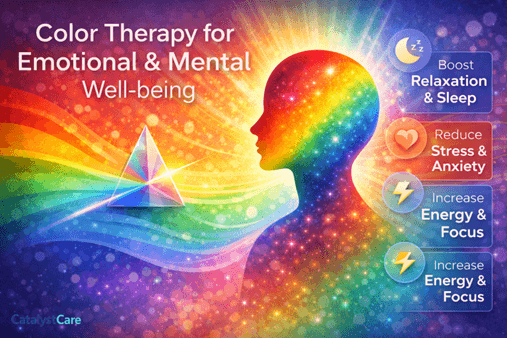
The Art of Colors and the Mind: Greater Than You Think.
Colors are one of the most minor but strong forces in our life. They are not merely ornamentation of our environment - they silently influence feelings, ideas and even actions.
Interestingly, colors are one of the first things we learn when we are children but they shape us during our life. Each color possesses its frequency and wavelength and the physical properties may evoke various psychological and physiological reactions in the human brain.
This notion is the foundation of an approach known as Chromotherapy (Color Therapy) - a concept that employs the use of color with the purpose of facilitating emotional, mental, and physical health.
Colors are in interaction with our mood and thinking, and we see it in the paint of our walls, the clothes we wear, and even the light in our houses, among others.
What Colors Can Do to Our Mind

According to research and observations, it can be argued that colors can impact a variety of our well-being:
Reduce discomfort and pain
Green environments like nature have been associated with relaxation and lessening of pain perception.
Improve sleep quality
The darker blues and soft greens that form calming surroundings make the brain ready to sleep - unlike screens of blue light that interfere with sleep.
Enhance focus and alertness
Bright colors such as yellow are stimulating and can enhance attention, making them useful in areas of study or work.
Stimulate appetite
Red and orange are known as warm colors and are known to stimulate appetite - hence the reason most restaurants apply them in their interior decorations.
Boost energy levels
Red and orange are energizing hues that can make one feel more alert and energetic.
Reduce stress and anxiety
Blue and green are cool colors that ensure emotional stability and relaxation.
Support mood regulation
Yellow helps to increase mood while blue and green help to reduce emotional overwhelm.
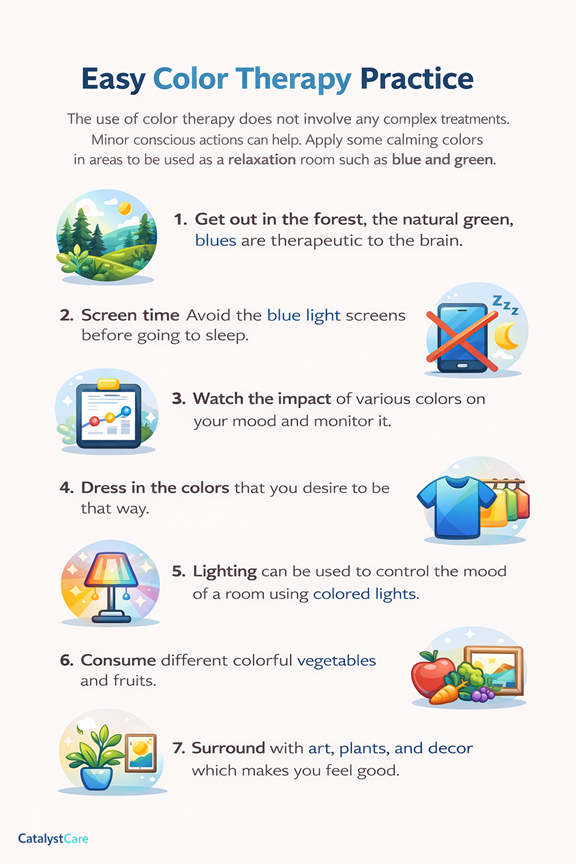
Easy Color Therapy Practice
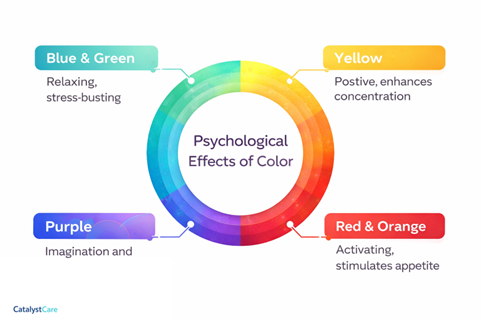
Which Colors Work Best?
The effect of color is pathetic, though generally:
Color Therapy and Mental Health
In the case of anxiety, sea-like blue and green will be helpful in generating a feeling of security and tranquility.
Bright warm colors such as yellow or orange can be used to aid in emotional upliftment in case of low mood or depression.
Given that each person will respond to colors differently, there is no secret other than knowing what works for you.
The Other Side: Dark Psychology of Colours
Although colors calm us and make us feel better, they can also be applied tactically to influence our decisions.
Ever wonder why sale signs are always red? That is not accidental. Red inherently draws our attention and gives us a sense of urgency which can prompt faster decisions.
Equally, yellow is commonly employed in warnings or advertisements since it is among the colors most noticed by the human eye.
Blue is closely related to trust and reliability. This is the reason why numerous banks, financial institutions and technology companies use blue in their branding.
The colors applied in social media notifications are also selected with great care so that we are drawn back to the screen.
A Small Reminder
Our color choices are not merely aesthetic - they are psychological settings.
Even a slight color change can sometimes leave the mind in an easier state.
The next time you pick the color of your clothes, your room, or even your phone wallpaper - ask yourself:
"What feeling is this color beckoning into my thoughts today?"